Cold weather kills dashcam footage before you need it most
Benchmark Injury Law ·
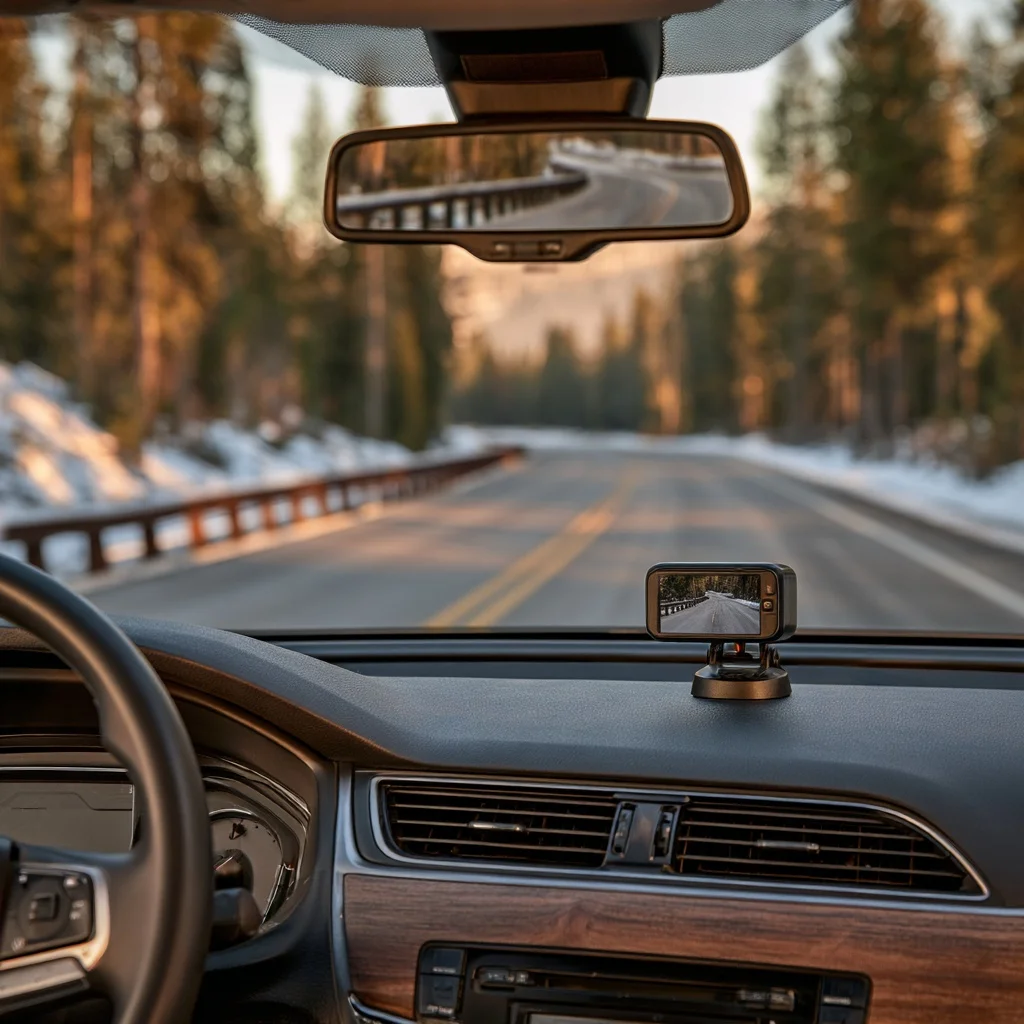
Winterizing your dashcam and phone before holiday road trips: how digital evidence wins Idaho injury claims
Idaho winters push temperatures well below the operating range of most dashcams and phone batteries. When a holiday road trip ends in a collision, dead devices mean lost footage, and lost footage means your injury claim rests entirely on your word against someone else's. That is a losing position in most disputes. The good news is that cold-weather device failure is preventable, and the steps are straightforward enough to complete before you leave the driveway.
Idaho's holiday travel season runs from late November through early January. Temperatures in Boise regularly drop into the low 20s Fahrenheit overnight, and mountain corridors like US-20 near Mountain Home or US-93 through Twin Falls can hit single digits. Standard lithium-ion batteries lose 20 to 40 percent of their capacity at 32 degrees Fahrenheit and can fail completely below 14 degrees. Most dashcam manufacturers list an operating minimum of 14 to 32 degrees Fahrenheit. If your device sits in a cold car overnight, it may not record the first minutes of your morning drive, which is exactly when black ice causes collisions.
Why digital evidence matters in Idaho injury claims
Idaho follows a modified comparative fault rule. If you are found 50 percent or more at fault for a collision, you recover nothing. That standard puts a heavy burden on physical evidence. Witness accounts conflict. Police reports note what responding officers observed, not what caused the crash. Dashcam footage, GPS track logs, and timestamped photos from a phone can establish speed, road conditions, signal status, and fault sequence in a way that verbal accounts cannot.
Insurance adjusters know this. A claim supported by video footage moves faster and settles closer to full value than one supported only by statements. A 2022 survey by a national insurance research group found that claims with dashcam footage were disputed at roughly half the rate of claims without it. For Idaho drivers crossing Blaine County, Custer County, or the Snake River Plain in winter, that footage is often the only independent record of what happened.
The practical takeaway: footage you never captured cannot help your claim. Cold-proofing your devices before you leave is the first step in protecting yourself legally.
What cold weather actually does to your dashcam
Dashcams fail in the cold in three distinct ways. First, the internal battery or supercapacitor loses enough charge to prevent startup. Second, the memory card becomes sluggish, causing write errors that corrupt recent footage. Third, the lens fogs or the housing contracts enough to trigger a loose connection.
Most consumer dashcams, including popular models from Vantrue, Thinkware, and BlackVue, use a small internal battery to save a final clip when power is cut. Below 14 degrees Fahrenheit, that battery may not hold enough charge to complete the save. You lose the last 30 to 60 seconds before impact, which is typically the most critical segment. Dashcams marketed as cold-weather units often substitute a supercapacitor for the internal battery because supercapacitors maintain function down to minus 40 degrees Fahrenheit.
MicroSD cards also have operating minimums. Most standard cards are rated to 32 degrees Fahrenheit. Industrial-grade cards, often labeled SLC or pSLC, are rated to minus 40 degrees Fahrenheit. Swapping to an industrial card costs roughly 20 to 40 dollars and eliminates one of the most common causes of corrupted footage in winter conditions.
Steps to winterize your dashcam before you leave
Start with the hardware. If your dashcam uses an internal lithium battery rather than a supercapacitor, consider replacing the unit before a long winter trip. Supercapacitor models are widely available and handle Idaho temperatures reliably. If you keep your current camera, store the vehicle in a garage or use a windshield cover to slow the overnight temperature drop in the cabin.
Next, check the memory card. Remove it, format it fresh in the dashcam itself rather than a computer, and confirm it is rated for low-temperature operation. A card that worked fine last July may fail at 15 degrees Fahrenheit on a December morning near Pocatello.
Check the mounting position. Suction-cup mounts lose grip in the cold. A dashcam that falls off the windshield mid-drive stops recording and may cause a secondary hazard. Adhesive mounts rated for temperature extremes hold more reliably. Test the mount by pressing firmly and tugging before every cold-weather trip.
Finally, review the footage format in your camera settings. Some dashcams default to a loop recording that overwrites files every one to three minutes. Set the loop segment to three minutes rather than one so a crash capture includes lead-up context. Confirm the camera powers on and shows a live recording indicator before you pull out of the driveway.
Winterizing your phone for backup documentation
Your phone is a backup dashcam, a GPS logger, and a first-response documentation tool. Cold kills phone batteries faster than almost any other consumer device. An iPhone or Android phone with a healthy battery at room temperature can drop to 20 percent capacity within 20 minutes of exposure to temperatures below 20 degrees Fahrenheit.
Keep your phone in an interior pocket or the center console rather than a cup holder near a cold door. If you must mount it on the windshield, use a mount with a built-in charging pad so the phone stays at operating temperature through the charging current. Set screen auto-lock to two minutes to reduce drain.
After any collision, your phone has three jobs: call emergency services, photograph the scene, and preserve the timestamp. Take photos before vehicles are moved. Photograph the road surface, any skid marks, traffic signals, signage, weather conditions, and all vehicle damage from multiple angles. Enable location services so the photos embed GPS coordinates automatically. Send copies to a cloud backup service or email them to yourself immediately so the files are off the device before it can be lost, damaged, or seized.
If you use a dashcam app such as DashCam or AutoGuard, verify that the app is set to auto-start when the phone connects to your car's Bluetooth. Cold-weather shutdowns often interrupt auto-start sequences, so test this before the trip rather than assuming it will work.
What to do immediately after a winter collision in Idaho
The moments after a crash determine how much evidence you preserve. Move to safety first, then stop your dashcam from overwriting the collision clip. Most dashcams have an emergency lock button that protects the current file from the loop recording cycle. Press it within 60 seconds of impact. If you cannot find the button, power the camera off entirely. A powered-off camera stops overwriting.
Document the scene with your phone before anyone moves a vehicle. Idaho law generally requires vehicles to be moved after a collision if they are blocking traffic, so your window for scene photos can be short. Focus on the final rest position of both vehicles, the point of impact on the road surface, and any contributing factors like ice patches, drifted snow, or obscured signage.
Exchange information with the other driver. Photograph their license plate, insurance card, and driver's license rather than hand-copying the information. Hand-copied data contains errors under stress. A photo does not.
Report the collision to Idaho State Police or the local sheriff if injuries or significant property damage are involved. Idaho law requires reporting collisions resulting in injury, death, or property damage over 1,500 dollars. File your own report even if law enforcement prepares one. Your written account, filed while the details are fresh, becomes part of the evidentiary record.
How local businesses in Idaho stay visible when customers need them most
Local businesses that serve drivers, travelers, and families across Idaho need to be findable when those customers are searching after an incident. A tow company in Twin Falls, a body shop in Meridian, or an urgent care clinic in Idaho Falls cannot help a customer who cannot find them online. That is where local SEO and a well-maintained Google Business Profile make a direct difference.
Talloo builds and manages the marketing infrastructure that keeps local businesses visible year-round. Through Visibility, we handle local SEO so your business appears in the searches that matter. Through Engage, we manage your Google Business Profile and social presence so customers find current, accurate information when they search after a stressful event. Through Foundation, we design and maintain websites that load fast and convert visitors into calls.
Owner-operators do not have time to monitor search rankings, update business profiles, and manage websites while running daily operations. We handle the marketing infrastructure so the business stays visible and the owner stays focused on the work. If your local business serves the people traveling Idaho's highways this winter, being found at the right moment is not a marketing luxury. It is a revenue requirement.
Get in touch for a quote
Talloo works with local businesses across Idaho and beyond. If your business needs to get found, build trust, and convert demand from customers searching online, we are the team to call. Tell us about your business and what you are trying to accomplish. We will give you a straight answer on what it takes and what it costs.
Get in touch for a quote today.
Frequently asked questions
What temperatures cause dashcams to stop recording in Idaho winters?
Most consumer dashcams have an operating minimum between 14 and 32 degrees Fahrenheit. Idaho mountain corridors and overnight lows in the Treasure Valley regularly hit those thresholds from November through February. A dashcam parked outside overnight near Pocatello or Twin Falls can fail before you reach the highway. Supercapacitor models operate reliably down to minus 40 degrees Fahrenheit and are the better choice for cold-weather driving.
Does dashcam footage actually change how Idaho injury claims are resolved?
Yes. Idaho uses a modified comparative fault standard where being 50 percent or more at fault bars recovery entirely. Footage that establishes road conditions, signal status, and fault sequence directly affects how adjusters and attorneys evaluate the claim. Claims supported by video documentation are disputed at roughly half the rate of claims without it, based on national insurance research data.
What is the difference between a dashcam with a battery versus a supercapacitor?
A lithium-ion battery stores more energy but loses 20 to 40 percent of its capacity at 32 degrees Fahrenheit and can fail completely below 14 degrees. A supercapacitor holds less total energy but maintains full function down to minus 40 degrees Fahrenheit. For Idaho winter driving, a supercapacitor model is the more reliable choice because it saves the final clip after a collision even in extreme cold.
How do I protect the dashcam footage immediately after a crash?
Press the emergency lock button on your dashcam within 60 seconds of impact. This stops the loop recording from overwriting the collision clip. If you cannot locate the button, power the camera off entirely. A powered-off camera does not overwrite. Do not format or erase the card, and do not remove it from the camera until you have confirmed a copy is saved elsewhere.
Can I use my phone as a dashcam in cold Idaho weather?
A phone can serve as a backup dashcam, but cold accelerates battery drain significantly. Keep the phone in an interior pocket or use a windshield mount with a built-in charging pad to maintain operating temperature. Test your dashcam app's auto-start feature before the trip because cold shutdowns interrupt the sequence. Set the app to record automatically when Bluetooth connects to your vehicle.
What type of memory card should I use in my dashcam for winter driving?
Standard microSD cards are rated to 32 degrees Fahrenheit and can fail or corrupt footage in colder conditions. Industrial-grade cards labeled SLC or pSLC are rated to minus 40 degrees Fahrenheit and cost roughly 20 to 40 dollars. Format the card in the dashcam itself before each season, not on a computer, to reduce write errors.
What photos should I take at the scene of a winter collision in Idaho?
Photograph the final rest position of both vehicles, the point of impact on the road surface, any skid marks, ice patches, drifted snow, obscured signage, and traffic signals. Capture the other driver's license plate, insurance card, and driver's license. Enable location services before shooting so GPS coordinates embed automatically in each photo. Send copies to cloud backup or email them to yourself before leaving the scene.
Does Idaho law require me to report a winter collision to police?
Idaho law requires reporting any collision that results in injury, death, or property damage exceeding 1,500 dollars, either to Idaho State Police or the local sheriff. File your own written report even if law enforcement prepares one. Your written account filed while details are fresh becomes part of the evidentiary record and can support your injury claim if the case is disputed.
How does Talloo help local businesses in Idaho get found by customers after road incidents?
Talloo manages local SEO, Google Business Profile, social presence, and website design through three service tracks: Visibility, Engage, and Foundation. A tow company, body shop, or urgent care clinic in Idaho needs accurate, current information in search results when customers are searching after a stressful event. Talloo handles that marketing infrastructure so the business stays visible without taking the owner away from daily operations.
What is the first step for a local Idaho business that wants better visibility online?
Get in touch with Talloo for a quote. Bring basic information about your business, your service area, and what you are currently doing online. One conversation is usually enough to identify where visibility gaps are costing you customers and what it would take to close them.